Types of Scaffolding: A Complete Overview
Behind every safe building , scaffolding quietly holds the key to keeping workers and materials secure. When chosen well, it fades into the background without attracting much attention. When it’s wrong, it complicates inspections and slows crews, while creating unnecessary risk.
Scaffolding is a short-term structure that’s used to support crews and materials during construction and industrial work or maintenance projects. But not all scaffolds are created equal: The type of scaffold affects crew flow, material staging, inspection routines, and a project’s overall efficiency from start to finish.
Fully understanding a project’s scope helps solve specific access problems on worksites. How high do crews need to go? What’s the maximum weight the platform can carry? Is the site wide open or boxed in by streets, equipment, and existing structures? All of these questions narrow down the choice for the right scaffolding types for each job.
What are the three types of scaffolds? In a broad scope, scaffolding systems range from traditional ground-supported frames to suspended platforms to mobile (rolling) systems. Within these categories, however, are specialized setups and modern systems designed to solve more complex access challenges. Materials, configurations, safety features, and other factors vary widely, so understanding the main categories upfront helps teams avoid costly changes later and keeps projects running smoothly.
Supported Scaffolding
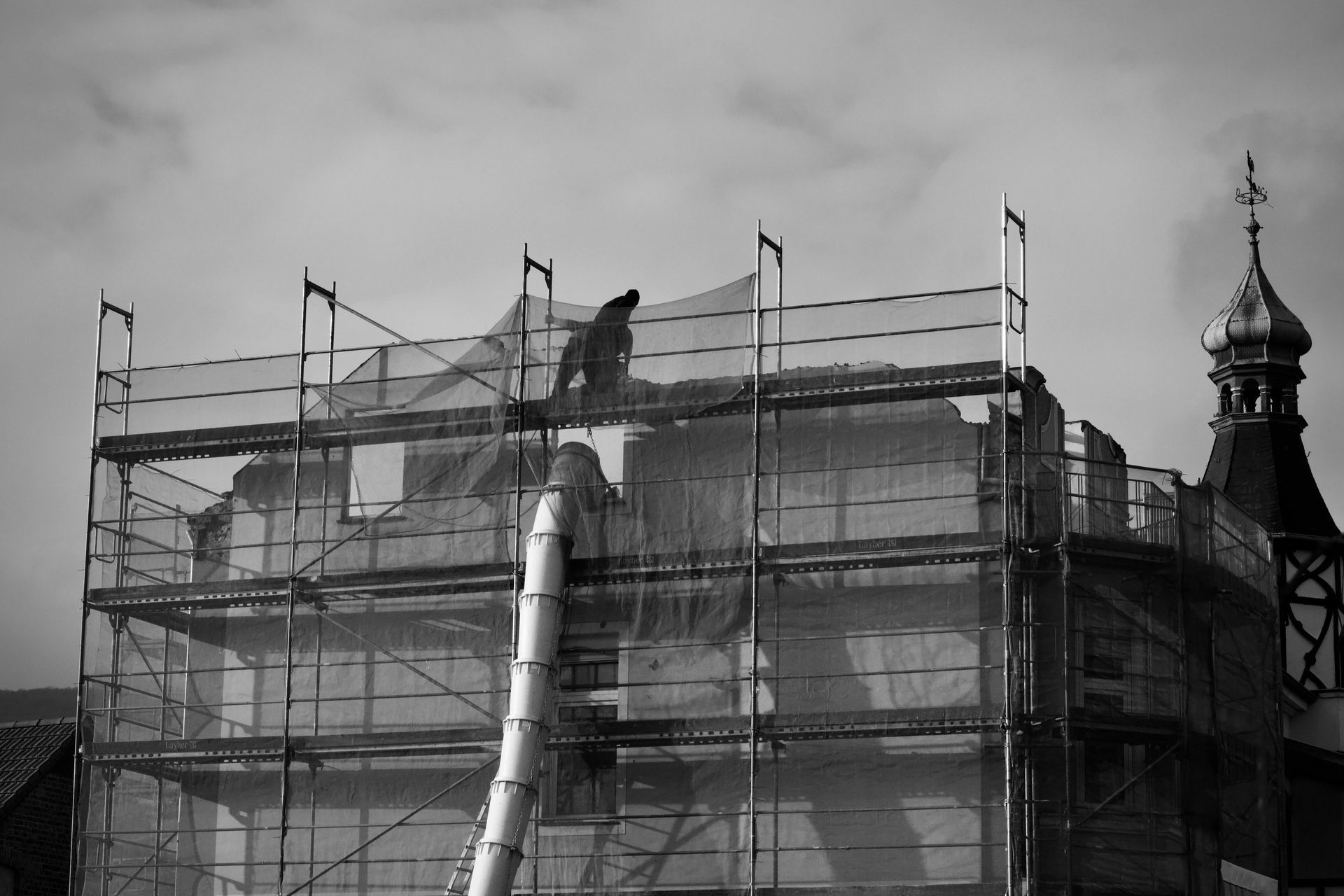
Supported scaffolding is the most widely used scaffold type across the construction industry. It’s built from the ground up and transfers loads directly through vertical components into a stable surface below.
This type of scaffold is common on building facades, commercial developments, long-term repair projects, and similar environments. Since it grows upward from a solid base, supported scaffolding offers excellent stability and predictable load behavior when it’s properly designed and installed.
Most supported scaffolding systems are made up of frames or modular components connected with braces, platforms, guardrails, and access points. Steel scaffolding is often preferred for these systems due to its strength and durability, along with its ability to handle higher loads over extended periods.
Where supported scaffolding really proves its value is in how well it supports complex, multi-trade work. It creates consistent, reliable access across large work areas.
Supported scaffolding is particularly effective when projects require:
- Multiple working levels operating at the same time
- Integration of stairs, ladders, material handling systems
- Long-term installation without frequent repositioning
- Straightforward inspection using well-established standards
In addition to standard configurations, supported scaffolding can be customized with stair towers, hoists, multiple platform widths, and other variations to accommodate different trades simultaneously.
This flexibility allows project managers to sequence work more efficiently, giving painters, electricians, masons, and other workers safe and coordinated access without interference. Regular inspections are easier since most supported scaffolds have predictable load paths and standard connection points.
The main limitation of supported scaffolding is its dependence on ground conditions. Uneven surfaces, underground utilities, and tight footprints can all complicate installation. Still, when space allows, it remains one of the most versatile and trusted scaffold solutions available.
Suspended Scaffolding
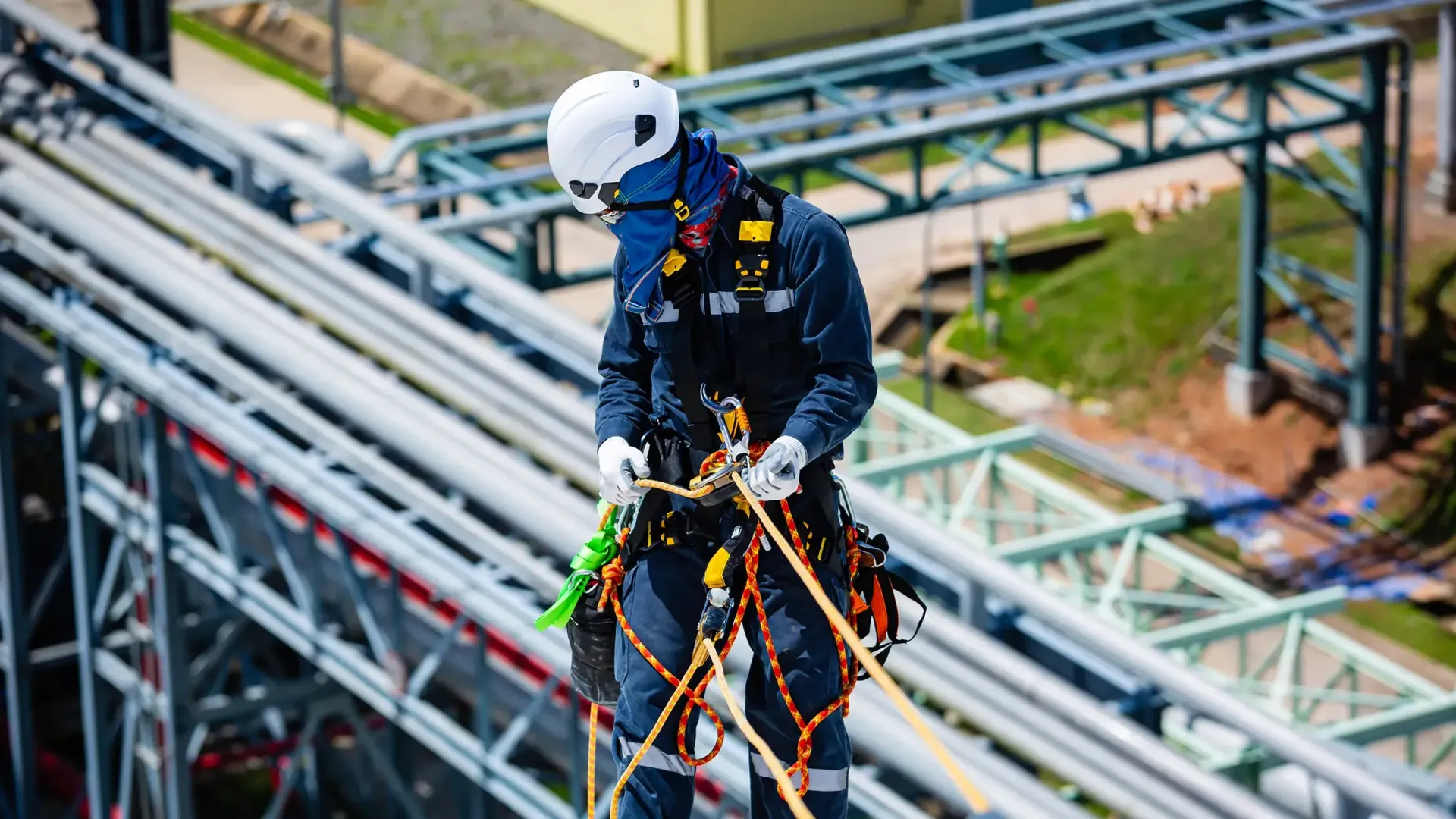
Suspended scaffolding flips the usual approach upside down. Instead of building from the ground, the platform hangs from an overhead structure using ropes and cables or mechanical hoists.
This system is commonly used for high-rise building maintenance, window washing, bridge inspections, and industrial applications (tanks, stacks, and silos). In these environments, building supported scaffolding from the ground isn’t practical or even possible.
One of the biggest advantages of suspended scaffolding is vertical flexibility. Crews can raise or lower the platform to reach different elevations quickly, making it ideal for facade work that moves up and down, rather than side to side.
Safety is a must. Since the system depends entirely on overhead anchorage, tie-backs, load-rated suspension components, secondary fall protection, and automatic braking devices are needed. Workers also require training on inspection routines to ensure that every hoist, rope, cable, or other connection is secure before use.
Another key benefit is reduced site congestion. Since suspended scaffolds don’t rely on ground support, crews can operate in tight or high-traffic areas without blocking anything, such as pedestrians, vehicles, or other trades. This makes them ideal for urban construction and infrastructure projects where keeping the area below clear is essential.
Suspended scaffolding typically supports lighter loads and smaller crews than supported scaffolds. It’s not designed for heavy material staging. But it excels at providing targeted access where traditional scaffolds fall short.
Rolling Scaffolding
Rolling scaffolding is designed for jobs that require frequent movement without constant setup and teardown. These scaffolds are mounted on casters, allowing crews to reposition the platform quickly across a flat surface.
You’ll most often see rolling scaffolds indoors or in controlled environments, such as warehouses, manufacturing facilities, schools, and commercial interiors. Painting, electrical work, ceiling installation, and similar tasks benefit from the mobility these systems provide.
Rolling scaffolds are usually lighter than other scaffold types and are assembled from frames, platforms, guardrails, and locking wheels. Their simplicity makes them efficient but also means workers must stay disciplined about safe use.
Since movement introduces instability, rolling scaffolds come with clear limitations. Height restrictions, level surfaces, and locked casters are needed to prevent tipping or unintended movement during use.
Key hazards crews need to manage include:
- Failing to lock wheels before climbing
- Moving the scaffold while occupied
- Using rolling scaffolds on uneven or sloped surfaces
When used correctly, rolling scaffolding saves time and reduces fatigue, while supporting multi-step interior work without compromising safety.
Cantilever Scaffolding
Cantilever scaffolding exists for one main reason: Sometimes there’s nowhere to build from the ground. In these cases, the working platform projects outward from a structure and is anchored at one end.
This type of scaffold is commonly used over sidewalks, roads, rail lines, rooftops, or sensitive surfaces where base supports aren’t an option. Cantilever scaffolds let work continue safely without blocking traffic or damaging the area below.
Since the load isn’t evenly distributed, cantilever scaffolding requires careful engineering. Anchorage points need to handle both vertical and horizontal forces. This scaffolding might also require counterweights, and every setup should undergo load testing before use.
But cantilever systems allow for more creative solutions on irregular structures. Platforms can be offset or tiered to navigate around columns and ledges or other obstacles. While these setups require careful planning and engineering oversight, they provide access solutions that aren’t possible with conventional scaffolds.
What sets cantilever scaffolding apart is its ability to provide access where other scaffold types can’t. It’s the go-to option for tricky sites with minimal room for traditional supports.
Ringlock and System Scaffolding
(Modern Modular Systems)
System scaffolding represents a shift from pieced-together scaffolds to fully engineered, modular access solutions. These systems use standardized components designed to connect quickly and safely.
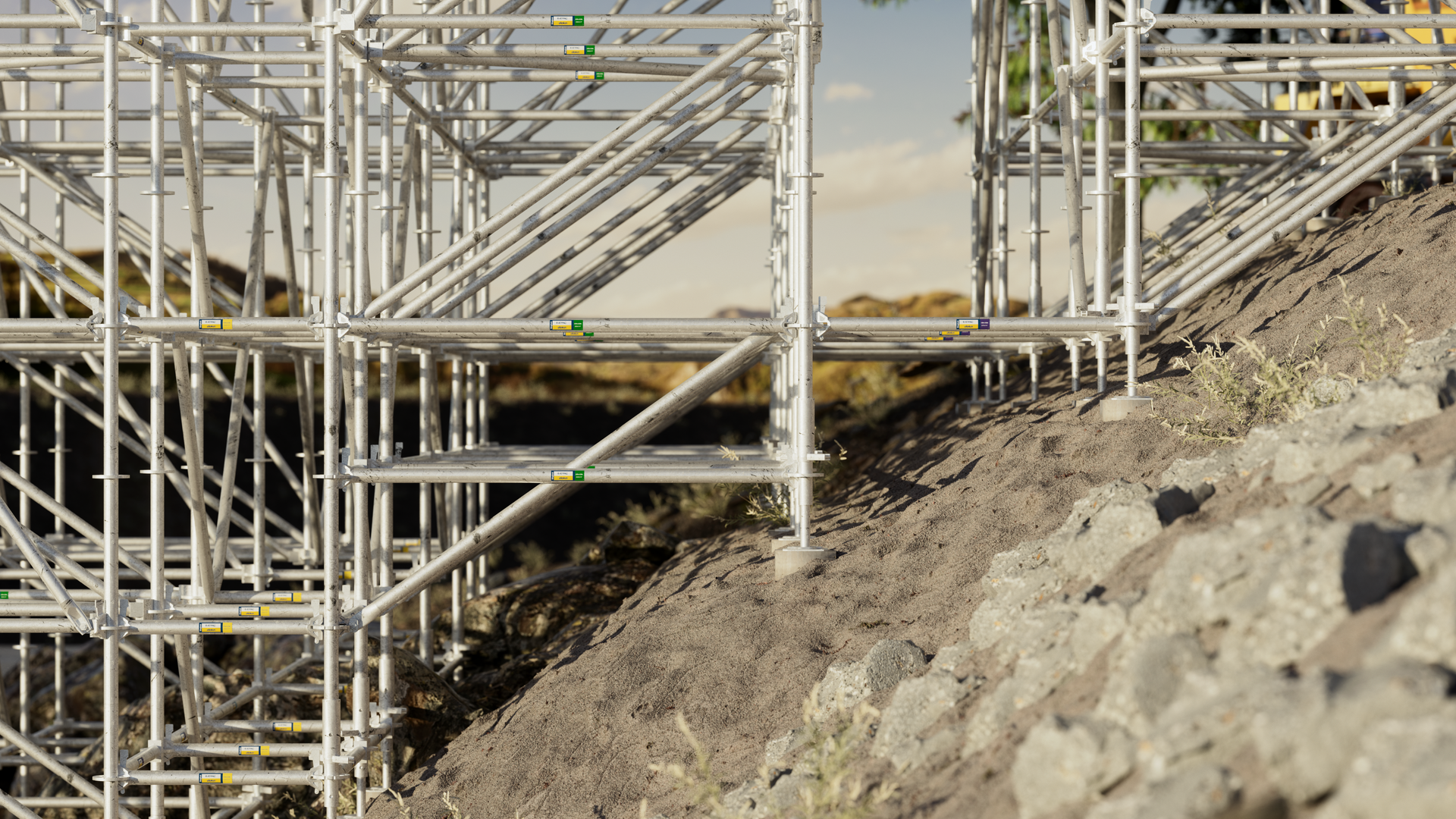
Ringlock is one of the most widely adopted system scaffolding solutions. Its defining feature is the rosette welded to each vertical standard, allowing ledgers, braces, accessories, and other components to connect at multiple angles with a simple hammer action.
This connection method creates predictable load paths and reduces assembly errors, while making it easier to adapt the scaffold to irregular structures and curved surfaces or complex elevations.
System scaffolding offers several advantages:
- Rapid assembly and dismantling without specialized tools
- High load capacity with consistent, engineered performance
- Flexibility to handle complex layouts, curves, and variable heights
Ringlock scaffolding is heavily used in industries where complexity and load demands are high, including power generation, oil and gas, shipbuilding, infrastructure, and large-scale commercial construction. These environments require a scaffold system that keeps pace with tight schedules and strict safety standards.
Ringlock scaffolding solutions from AT-PAC support global industrial, commercial, and infrastructure projects. These systems are built to meet international safety standards while providing the flexibility modern jobsites demand.
Choosing the Right Type of Scaffolding for Your Project
Choosing a scaffold is a planning decision that affects safety, productivity, cost, and other factors. The right system supports the work, while the wrong one creates friction at every stage.
Key factors include height, load capacity, site restrictions, project duration, access needs, and regulatory requirements. Environmental conditions, such as wind exposure or uneven terrain, also influence which scaffold system works best.
Note that scaffold needs can change as a project progresses: Early construction phases may call for heavy-duty supported scaffolding, while later stages benefit from modular or suspended systems that adapt to finished surfaces and tighter access. Planning for these transitions upfront reduces downtime and keeps crews productive, while minimizing safety risks.
A traditional scaffolding system still serves many straightforward applications. But modern engineered systems like Ringlock reduce assembly time and improve consistency, while simplifying compliance on more complex sites. Considering flexibility and future needs upfront often pays off more than selecting the cheapest or fastest option.
Understanding the full range of scaffolding types — from supported scaffolding and suspended scaffolding to cantilever systems and modern modular solutions — gives teams the insight needed to plan smarter and work safer, while keeping projects on track.
If you’re evaluating options or planning your next phase, find an AT-PAC location to get started and connect with local experts who can help match the right scaffold system to your site conditions, schedule, budget, and safety requirements.
You might also like
AT-PAC Blog